How to build a durable real estate portfolio

Year after year, real estate remains one of the most reliable wealth vehicles for an investor who thinks in decades rather than cycles. But building a solid portfolio is not a matter of luck or perfect timing. It is the result of a method: rigorous location, disciplined diversification, an adapted financing structure, and constant management of the asset over time.
At Immo Alliances, this is the approach we apply to our own projects: from development, through financing and construction, to rental management. Here are the principles that distinguish a real estate portfolio that weathers the cycles from one that is vulnerable at the first slowdown.
Location before headline yield
Investors who build durable wealth do not chase maximum short-term return. They prioritize the quality of the location, because it is location that determines whether an asset stays relevant in ten or twenty years, not just whether it performs well today. A well-located asset leases more easily, holds up better through vacancy cycles, and keeps its value even when the market slows. A high gross yield resting on an area with weak rental demand is often a signal of risk rather than an opportunity: the yield compensates for a structural problem, it does not fix it.
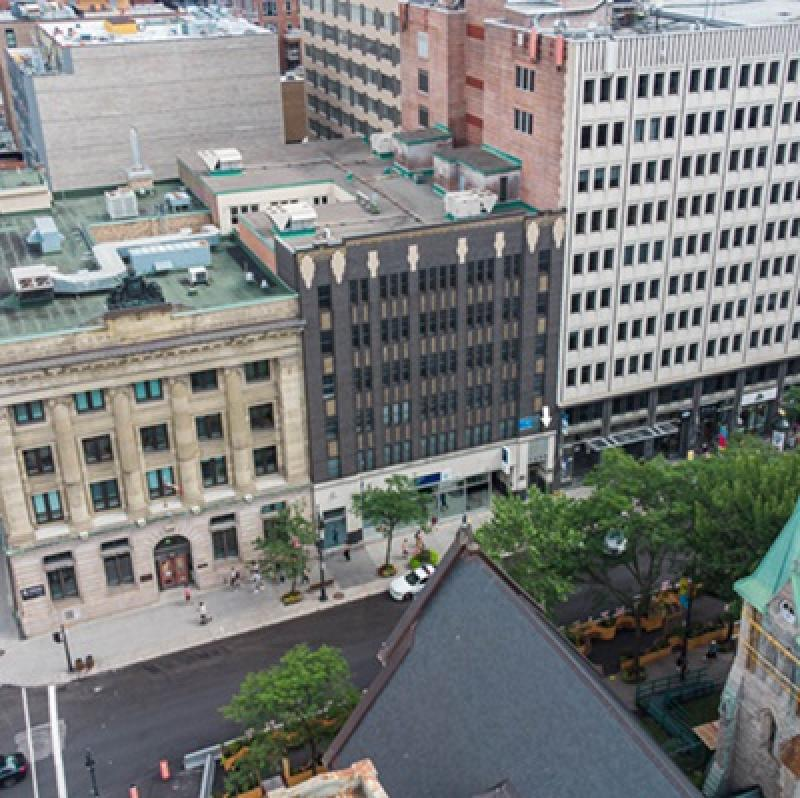
In Greater Montreal, that means assessing three elements before any purchase: the area's real rental tension, proximity to current and planned transport infrastructure, and the trajectory of municipal development. A building well located today, but in a neighbourhood with no densification or public-investment plan, risks losing its relative relevance over time, even if nothing physically changes about the building itself.
Diversify to protect, not just to grow
Owning different types of assets protects against a specific risk: that a single factor weakens the whole portfolio at the same time. A slowing employment sector, a regulatory change, a shift in immigration policy, or an asset class falling out of favour can each affect part of the market without touching the rest. A portfolio concentrated in a single property type or a single segment has no way to absorb this kind of shock: when the affected factor retreats, the entire portfolio retreats with it.
Diversification acts as a counterweight to this risk. It can be built at several levels. Between asset classes first: residential, commercial, office, industrial and hospitality do not react to the same economic cycles. Between market segments next, by combining high-end and entry-level housing, whose demand evolves differently depending on the economic climate and immigration eligibility thresholds. Between Greater Montreal neighbourhoods finally, each with its own development dynamic.
The goal is not to accumulate different assets for its own sake. It is to ensure that no isolated shock, however severe in a given segment, can put the entire portfolio at risk at the same time.
Financing as leverage, not fragility
Credit leverage remains one of the most powerful tools for building a real estate portfolio. The principle is simple: rental income repays part of the loan while the asset can appreciate, which lets you control a full asset with a partial down payment. But the same leverage that amplifies growth also amplifies structural mistakes. Financing designed only to enable the acquisition can look optimal on paper while being fragile in practice: it tolerates no surprises.
Structuring financing to last is something else. It means providing a real safety margin between rental income and total expenses, rather than calculating a scenario that assumes everything goes as planned. It also means anticipating the moments when leverage becomes a risk rather than an advantage. A savvy investor structures financing so that these surprises, taken individually or combined, do not shake the entire portfolio.
Energy performance, an increasingly important wealth criterion
The durability of a real estate asset is no longer limited to its location or financial structure. The building's overall efficiency influences its value over time and its long-term rental appeal, all the more as energy requirements tend to tighten, as is already the case in several major European cities. An energy-hungry building leads to higher expenses and a risk of costly upgrade work in the coming years, often at the very moment the market demands better performance.
Conversely, an asset designed or renovated to high performance standards works on several fronts at once. For occupants, it translates into greater comfort and reduced energy costs, which strengthens retention and tenant satisfaction. For financing, better energy performance can today give access to more advantageous loan conditions from CMHC. And for the asset's value, these benefits combine in a market where environmental criteria weigh more and more in purchase decisions.
Active management, the often underestimated factor
A well-built real estate portfolio can lose value if it is poorly managed day to day. Property management is not a secondary administrative task: it is what makes the difference between a building that performs and one that stagnates. Good management improves the asset's return, occupant satisfaction, and the building's quality over the long term, notably through planned rather than reactive maintenance. Rigorous oversight of expense control and careful tenant selection reinforce this profitability over time. That is often where the difference is decided between a portfolio that holds its ground and one that quietly erodes year after year.
Think in decades, not transactions
Building a durable real estate portfolio demands a different discipline from quick buy-and-sell. Buy-and-sell seeks a quick gain on the transaction itself; building a portfolio seeks something else: accumulating quality assets, financed according to an overall investment strategy, and held long enough to benefit from the dual effect of debt repayment and the market's potential appreciation.
This approach requires patience, but in return it offers something few asset classes provide: transferable wealth, anchored in a fundamental need that never disappears, even in times of economic uncertainty. Time becomes an ally rather than a constraint, provided each asset is structured to weather it rather than merely survive it.
An integrated model, from asset selection to management
Structuring a solid real estate portfolio requires an overall vision rarely available from a single provider. That is precisely the value of Groupe Immo Alliances' integrated model: development, financing structure, construction and rental management brought together under one team, across Greater Montreal. This overall vision, applied to our own projects, is what lets us think of each asset as a piece of a portfolio rather than an isolated transaction.
Have a real estate project?
From vision to delivery, Groupe Immo Alliances supports you at every step. Let's talk about your project.