Montreal neighbourhoods to watch for high-growth-potential investment

Montreal is not a single real estate market — it is a mosaic of dozens of micro-markets, each with its own dynamics of price, rental demand and pace of transformation. For an institutional investor, a financial partner or a developer who structures decisions around data rather than passing trends, this reality changes everything. A project's return depends not only on the right timing, but on the right borough.
At Immo Alliances, our integrated positioning across development, construction, rental management and condominium management throughout Greater Montreal places us at the intersection of that data. Here is our reading of the areas that today show the clearest signals of medium-term appreciation.
What sets a high-potential area apart
Before naming neighbourhoods, we have to name the criteria. An area does not become attractive by accident; it usually meets a combination of measurable factors:
- Access to public transit, notably current and planned REM service and metro network extensions
- Sustained rental pressure, revealing residential demand that outstrips available supply
- Entry prices still below those of comparable central neighbourhoods, leaving room for appreciation
- Municipal and private investment underway, whether commercial revitalization, asset conversion or new mixed-use projects
- Local economic diversification, including nearby technology or institutional employment hubs
Cross-referenced with Greater Montreal's demographic data (a continuously growing population and a supply of new housing that still struggles to keep up with demand), these criteria draw a fairly precise map of the areas to prioritize.
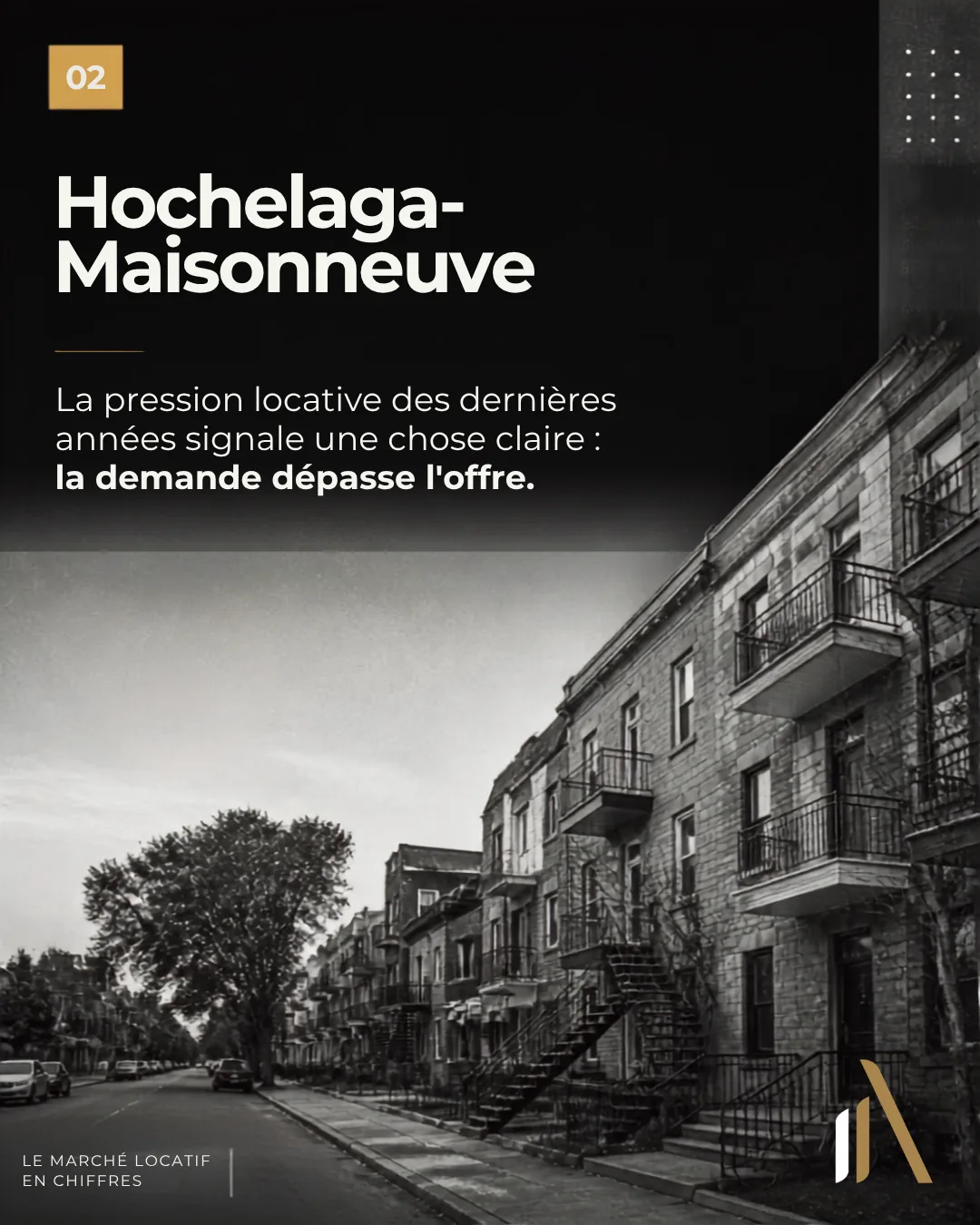
Hochelaga-Maisonneuve: the structural catch-up
HoMa remains one of the most documented cases of urban transformation in Montreal. Pressure on rents there has been particularly strong in recent years, a sign of a real compression of residential supply. The neighbourhood combines a built heritage with strong character, purchase prices still lower than the Plateau or downtown, and a gradual arrival of local businesses that accompanies the settling of young families. For an investor seeking solid rental yield with appreciation potential still ahead rather than behind, HoMa remains a benchmark area.
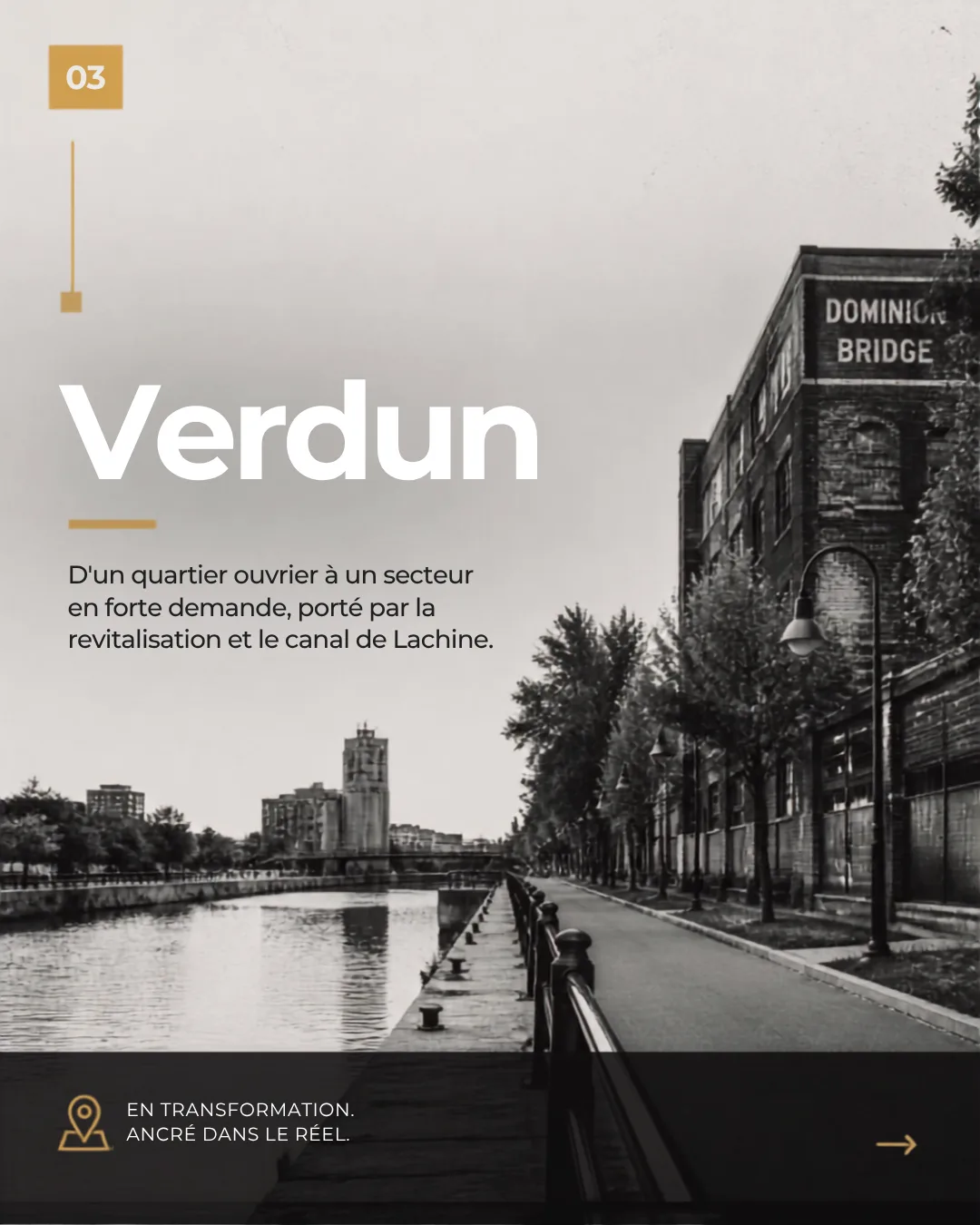
Verdun: the confirmed revitalization
Verdun has moved from working-class neighbourhood to a market in high demand, driven by the revitalization of Wellington Street and by new residential projects along the Lachine Canal. Its proximity to downtown, combined with a distinct waterfront quality of life, makes it an area where stable demand pairs with value growth measurable in recent market indicators.
Villeray-Saint-Michel-Parc-Extension: value coming into view
Still affordable a few years ago compared with the rest of the island, this area is seeing its standing climb steadily as value-seeking buyers move in. Proximity to several metro stations and a dense residential fabric make it fertile ground for conversion and gentle densification projects — precisely the type of intervention where a developer-builder's integrated expertise makes the difference.
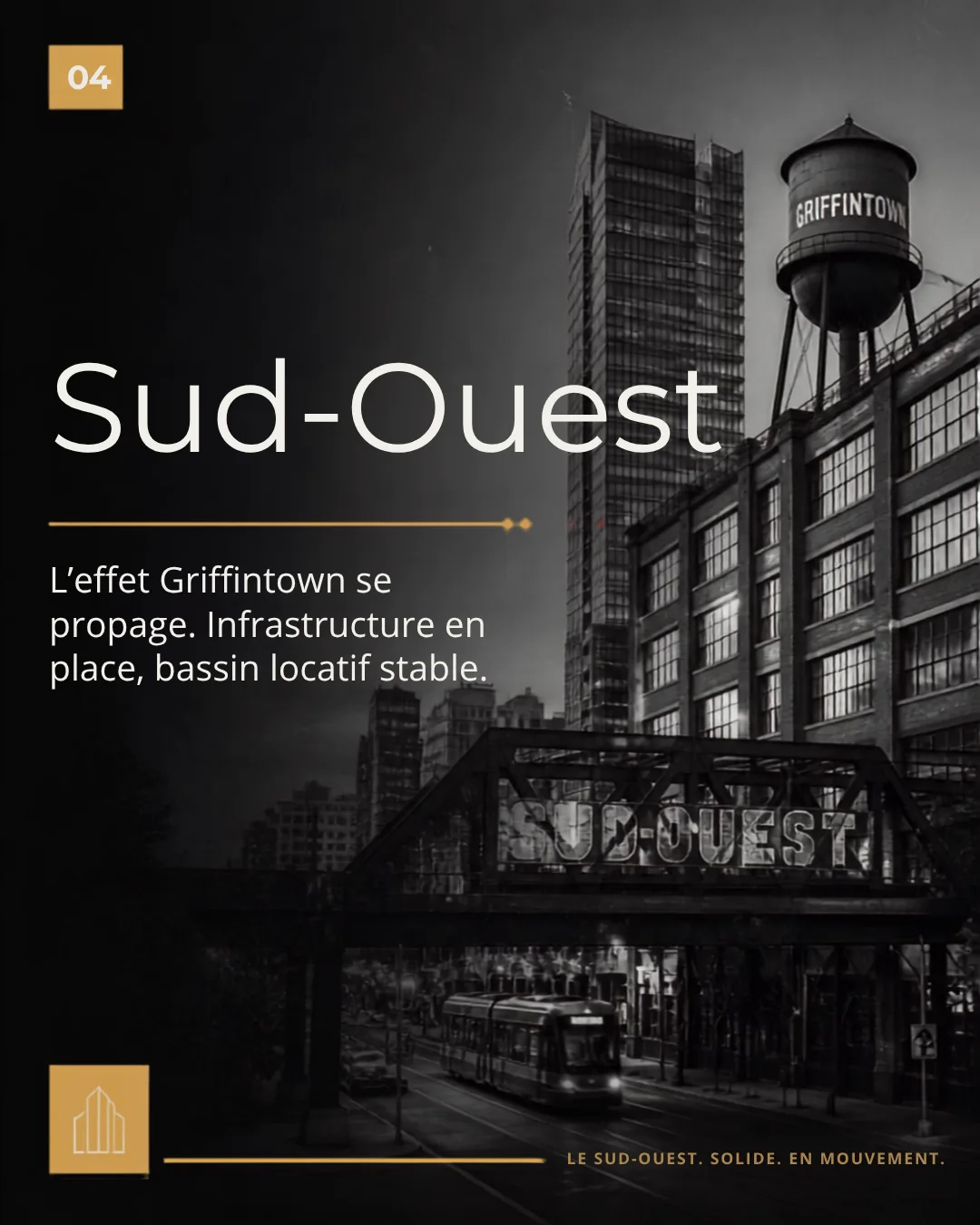
Le Sud-Ouest: the corridor effect
Le Sud-Ouest benefits directly from its proximity to downtown and from developments along the Lachine Canal, in continuity with what has already transformed Griffintown. Institutional investors find an appealing profile there: transport infrastructure already in place, a stable pool of professional tenants, and mixed-use projects that keep redefining the area.
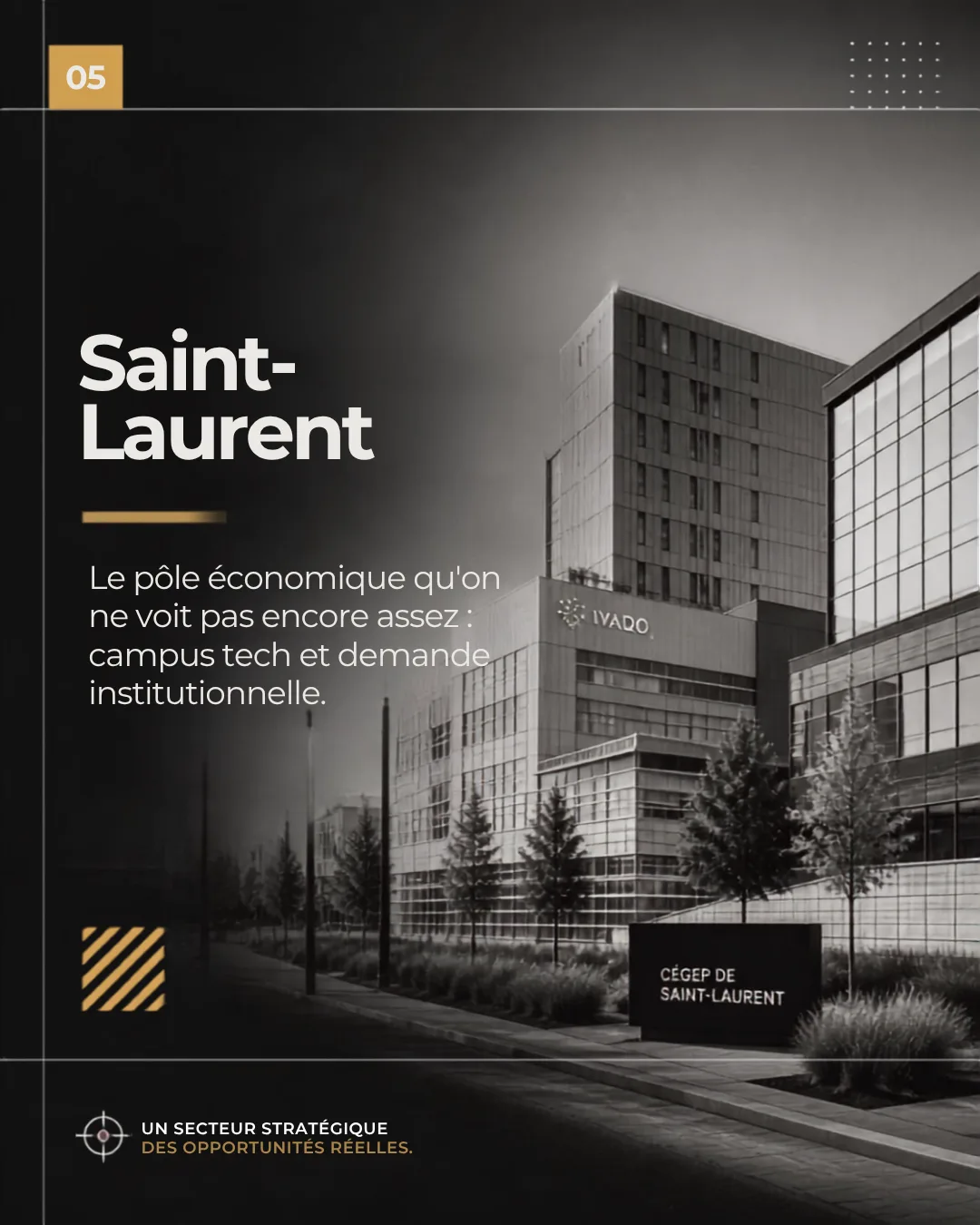
Saint-Laurent: the emerging economic hub
Less often cited in mainstream analyses, Saint-Laurent is gaining relevance thanks to the development of its technology campus and the continuous improvement of its infrastructure. An area driven by local employment growth presents a different rental-demand profile — more institutional, more stable — of particular interest to financial partners looking to diversify their exposure beyond already highly valued neighbourhoods.
What the REM and planned densification change for 2026 and beyond
Two structural factors reinforce this reading. First, the continued expansion of the public transit network (REM and metro extensions) is redrawing Montreal's accessibility map, and historically, each improvement in service precedes a revaluation of the affected areas. Second, the revised Metropolitan Land Use and Development Plan now steers growth toward better-planned densification rather than sprawl, concentrating future value in strategic redevelopment zones rather than dispersing it across the entire territory.
For an investor or a banking partner, this means one concrete thing: the areas that today combine accessibility in transformation, still-reasonable prices and municipal willingness to densify are the ones that will offer the most favourable risk-return ratio over the next five to ten years.
A market reading, an execution partner
Identifying the right neighbourhood is only the first step. The value of a real estate project is then built in the structuring, construction and long-term management of the asset. That is precisely the integrated model of Groupe Immo Alliances: we support our partners from potential analysis through to rental or condominium management, with a single team responsible end to end across Greater Montreal.
Are you evaluating an opportunity in one of these areas, or would you like a tailored analysis for your next project? Contact our team to discuss your investment strategy.